SolarStormAlert — Multi-source solar storm early warning
Solar storm alerts for people who'd rather not check.
SolarStormAlert is a lean web and mobile app that aggregates authoritative public space-weather data — Kp index, solar flare and CME activity, solar wind from L1 satellites — into clean, configurable warnings and alerts. Sources include NOAA SWPC, ACE/DSCOVR, NASA GOES, NASA SDO / ESA SOHO, NOAA WSA-ENLIL, and more. Built for people who want to know when the Sun is doing something serious without having to check.
Launching late 2026.
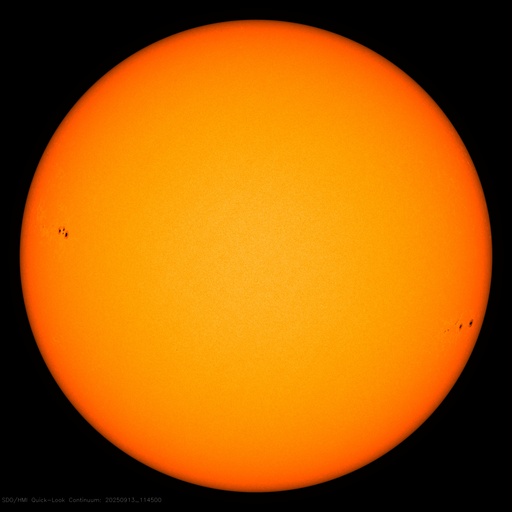
Solar storm tracking, alerts, and forecasts
- Live solar activity · Kp index, X-ray flux from X-class flare detection, solar wind speed, and coronal mass ejection tracking — aggregated from NOAA SWPC, ACE/DSCOVR L1 satellites, NASA GOES, NASA SDO / ESA SOHO, NOAA WSA-ENLIL, and others. No single-source dependency.
- Two-stage notifications · Solar storm warnings when something might be developing, alerts when it's confirmed. G3, G4, and G5 storm alert thresholds all configurable in the free tier. Premium adds iPhone Critical Alerts (override mute) and Family Alerts (notify additional email recipients).
- Forecast with confidence bands · We show the range and the confidence — the way the space weather agencies do. Never a fake-precise single number.
Built for infrastructure, ham radio, and amateur astronomy
If you operate in or near critical infrastructure — power grid, telecom, satellites, aviation, finance — and want a clean push when geomagnetic storm conditions cross into serious territory, SSA is for you. Aurora visibility comes along for the ride when conditions allow it.
If you're a ham radio operator, amateur astronomer, or aurora photographer already tracking SWPC and other agency dashboards, SSA aggregates the same authoritative data with cleaner thresholds and faster alerts than refreshing a dashboard yourself.
Solar storms only. No drama.
SSA tracks solar storms — geomagnetic activity, solar flares, and coronal mass ejections. Not earthquakes, volcanoes, UFOs, or anything else. We blend public data from the agencies that already do this work well. We don't add interpretation, prophecy, or drama. The data is dramatic enough.
Solar Cycle 25 and the 2026–2028 risk window
Solar Cycle 25 peaked in late 2024. Historically, the largest geomagnetic storms arrive in the declining phase of a solar cycle — placing 2026–2028 in the prime risk window for G4 and G5 storm alerts.
The May 2024 Gannon storm reached G5 and produced auroras visible to Mexico; the November 2025 X5.1 / cannibal CME reached G4 with widespread aurora visibility across the United States. These are warm-ups in the declining phase, not its endpoint. A Carrington-class event — the 1859 reference standard for an X-class flare followed by a fast Earth-directed coronal mass ejection — would dwarf both.
Last G4+ event observed: November 12, 2025 · via NOAA SWPC
Frequently asked questions about solar storms
- What is a solar storm?
- A solar storm is a disturbance in Earth's space environment caused by activity on the Sun — typically a solar flare, a coronal mass ejection (CME), or an unusually fast solar wind stream. NOAA's G-scale ranks geomagnetic storms from G1 (minor) to G5 (extreme), with the Kp index tracking real-time geomagnetic activity.
- How does SolarStormAlert work?
- SSA aggregates authoritative public data from multiple sources — NOAA SWPC, ACE/DSCOVR satellites, NASA GOES X-ray, NASA SDO / ESA SOHO imagery, NOAA WSA-ENLIL CME modeling, ESA Space Weather Service, BGS, and the UK Met Office — and compiles a best-guess current-state view. Two-stage notifications: warnings when forecast conditions look serious, alerts when storms are confirmed in progress. You configure your own threshold; the standard G5 push is always on for everyone, free.
- What is a Carrington-class event?
- A Carrington-class event refers to the 1859 Carrington Event — the strongest solar storm in recorded history, when an X-class flare and Earth-directed CME caused worldwide telegraph outages and auroras visible near the equator. A modern Carrington-class event would pose significant risk to power grids, GPS, satellites, and high-frequency radio.
- When does SolarStormAlert launch?
- Late 2026. The web foundation comes first; Android and iOS apps follow. Sign up above to be notified before launch.
- Is SolarStormAlert free?
- Standard G5 push alerts are free for everyone, always. G3 and G4 alerts are also free — fully configurable. The Premium tier adds G5 iPhone Critical Alerts (override-mute delivery via Apple's Critical Alerts entitlement), optional G4 Critical Alerts, and Family Alerts (notify additional email recipients alongside you). One low price, once a year.
- How are SSA's alerts different from public agency dashboards?
- SSA does not replace NOAA SWPC or any other agency. We aggregate their authoritative data — alongside ACE/DSCOVR, NASA GOES, ESA, BGS, and others — into clean push delivery, configurable thresholds, and forecast views designed for people who don't want to refresh a dashboard.
Authoritative space weather data sources
- NOAA Space Weather Prediction Center · Kp + G-scale + 3-day forecast
- ACE / DSCOVR L1 satellites · solar wind, Bz
- NASA GOES · X-ray flux, flare classification
- NASA Solar Dynamics Observatory · imagery, CME detection
- ESA SOHO · coronagraph imagery
- NOAA WSA-ENLIL · CME arrival forecasting
- ESA Space Weather Service Network
- UK Met Office Space Weather
- British Geological Survey · magnetometer ground-stations